

What to Wear
What you wear affects how safely a session moves. Fitted, flexible clothing keeps every scoop, hook, and lift controlled — loose fabric or the wrong footwear is one of the most common causes of avoidable slips or snags. Here's what we recommend for both Kama Flight and Kama Floor.
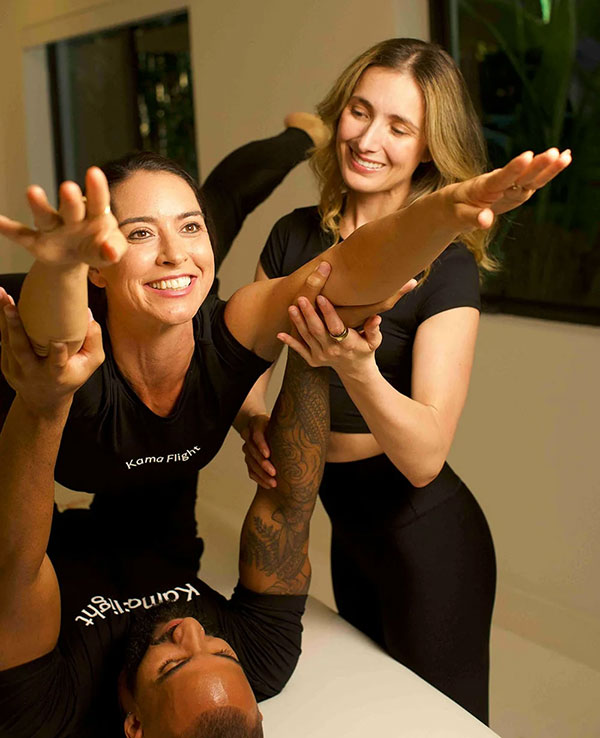
The Basics
- Fitted, flexible athletic wear. Leggings and fitted tops move with you; loose fabric can catch during scoops, hooks, and lifts.
- Bare feet, preferred. Bare feet give the best grip on both the table and the mat.
- Skip lotion or oil before class. Both can make skin and tables slippery right when grip matters most.
- Secure long hair and remove dangling jewelry or watches that could catch on a partner or scratch during close contact.
For Kama Flight (Table-Based)
Choose tops that stay in place through inversions and backbends — a fitted crop or tank works better than anything loose at the hem. Layers are fine for warm-up, but plan to shed them before full-range movement.
For Kama Floor (Mat-Based)
The same fitted-clothing rule applies, though Kama Floor is generally more forgiving since there's no elevation involved. Bare feet are still preferred over socks, which can be slippery on hard floors.
What Not to Wear
- Loose, baggy, or sheer clothing that can catch or shift during movement.
- Zippers, buckles, or hard embellishments that could scratch a partner.
- New or slippery-soled socks in place of bare feet.
Not sure what's appropriate for your session?
Ask your instructor before class, or check our Code of Conduct and Physical Readiness pages for more on preparing to practice safely.
