Why Trauma Sensitivity Matters in Wellness Spaces
Trauma sensitivity begins with a simple truth: people do not all arrive in the same nervous system state.
One person may enter a wellness class feeling curious and open. Another may arrive guarded, unsure, or quietly scanning the room for signs of danger. This is not weakness. It is biology. Trauma can train the brain and body to become highly alert to threat, even when no obvious danger is present.
In neuroscience, this heightened alertness is often connected to changes in systems involving the amygdala, stress response pathways, and prefrontal regions that help regulate emotion and decision-making. In everyday language, trauma can make the body ask, “Am I safe here?” before it can ask, “Can I relax, connect, or learn?”
This is why trauma-sensitive Partnered Wellness matters. Practices involving movement, touch, proximity, balance, or trust must begin with safety—not performance.
What Trauma-Sensitive Practice Looks Like
Trauma-sensitive wellness does not assume that every participant wants the same level of contact, pressure, speed, or closeness. It creates a space where participants can choose, pause, modify, and opt out without shame.
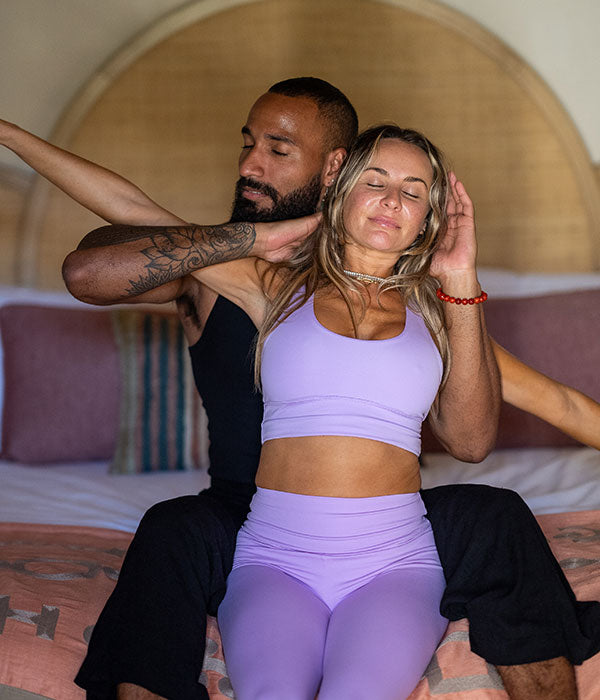
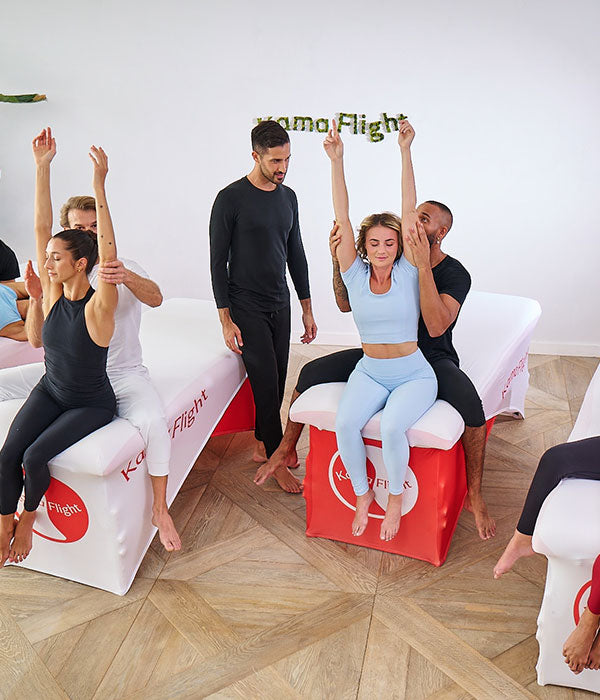
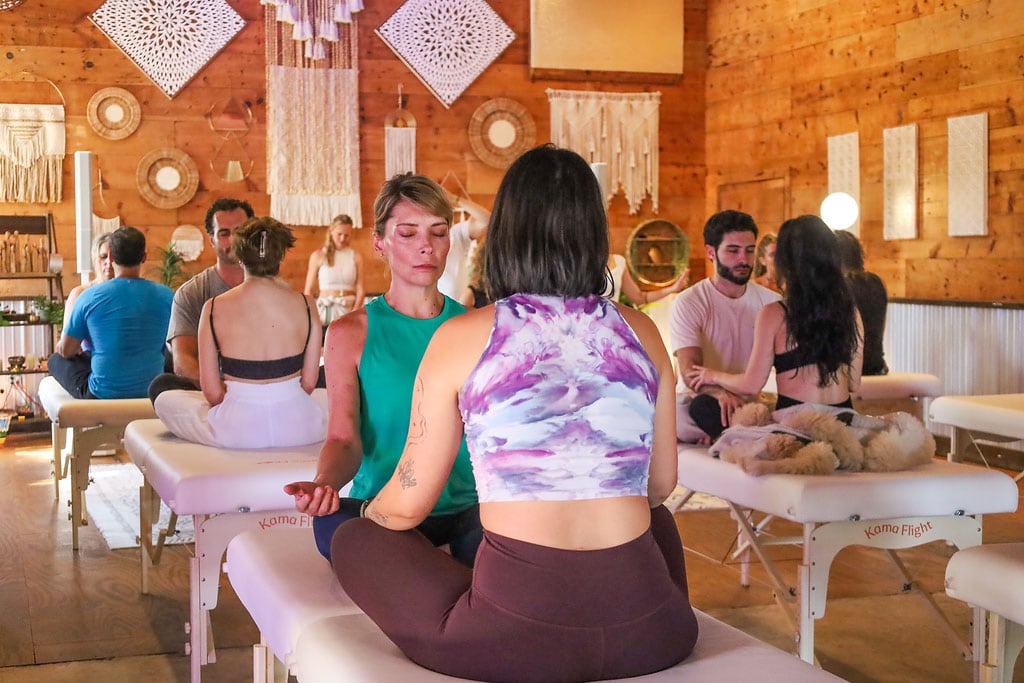
Kama Flight, a partnered movement practice focused on relational wellness, communication, trust, and human connection, may be especially strengthened by trauma-sensitive principles because the practice happens between people, in a high-trust, low pressure controlled environment with many safeguards. Such as “No Fly Zones” (areas of the body one may not touch), partner check-ins and more.Kama Flight’s approach to shared movement, responsiveness, and consent makes emotional safety just as important as the physical technique.
Safety Is More Than Avoiding Injury
In trauma-sensitive Partnered Wellness, safety includes:
-
Physical safety: the body is protected from strain or harm.
-
Emotional safety: participants are not pressured or shamed.
-
Relational safety: boundaries are respected.
-
Nervous system safety: the pace allows the body to stay present.
The nervous system responds not only to what is happening, but to how it is happening. A movement that feels playful in one context may feel overwhelming in another if a person does not feel choice or control.
How Kama Flight May Support Trauma-Sensitive Wellness
Kama Flight may help support trauma-sensitive wellness because it places consent, communication, and pacing at the center of the experience. Allowing participants to learn to notice their own body signals while also listening to another person. This can gently support skills such as:
Body Awareness
Trauma can sometimes disconnect people from internal signals. A trauma-sensitive Kama Flight practice may help participants notice breath, tension, comfort, discomfort, and ease in real time.
Communication
Instead of silently enduring something uncomfortable, participants can practice saying, “slower,” “pause,” “less pressure,” or “I’d like to stop.” These are not small skills. They are nervous system skills.
Trust
Trust grows when boundaries are honored repeatedly. Each respectful pause can teach the body that connection does not have to mean losing control.
A Neuroscience Lens on Safety
The brain is constantly predicting what will happen next. When an environment feels unpredictable or coercive, the body may move toward defense: bracing, freezing, withdrawing, or people-pleasing. When an environment feels clear, respectful, and adjustable, the nervous system has more opportunity to settle.
That does not mean Kama Flight treats trauma. It means Kama Flight may offer a supportive, consent-based wellness setting where people can practice safety, choice, and connection in the body.
Why This Matters for the Public
Many people think trauma sensitivity only belongs in therapy offices. In reality, trauma-informed thinking can improve schools, workplaces, fitness spaces, yoga studios, dance classes, and community wellness programs.
A trauma-sensitive approach asks better questions:
“How do we make this safe enough for participation?”
“How do we preserve choice?”
“How do we honor the body’s signals?”
For Partnered Wellness, these questions are foundational. The more safety a practice creates, the more deeply participants may be able to explore trust, movement, play, and connection.