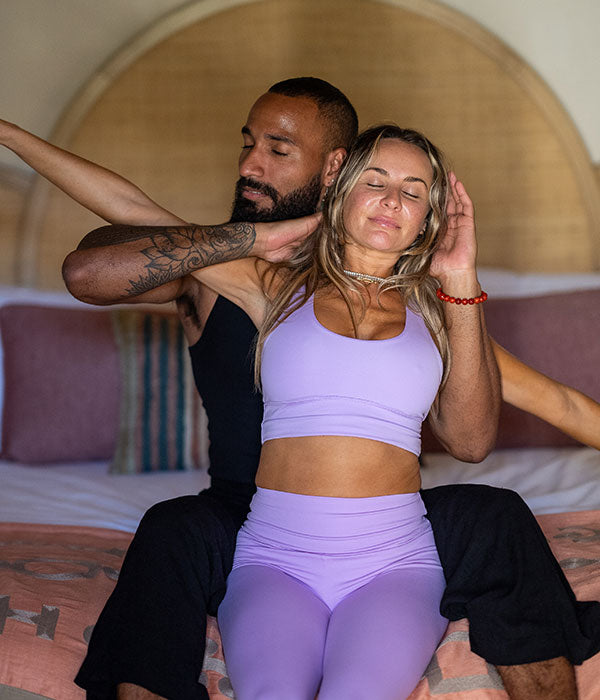
Consent is more than permission. In Partnered Wellness, consent is the living foundation that makes connection safe, intelligent, and transformative. It is the practice of asking, listening, adjusting, and honoring the body’s response in real time. For Kama Flight, a relational wellness practice rooted in partnered movement, touch, trust, and play, consent is not a side note. It is the nervous system’s first doorway into connection.
Kama Flight describes its mission as improving relational wellness, communication, trust, and human connection through evidence-informed partnered movement education. That mission becomes powerful when paired with a clear consent culture: every movement, touch, weight shift, pause, and breath becomes an opportunity to practice safety, choice, and mutual awareness.
In a world where wellness is often treated as an individual pursuit, Partnered Wellness offers something different. It teaches that healing, growth, and nervous system regulation can happen in relationship. But for that relationship to be beneficial, the body must feel safe. Consent is what helps create that safety.
What Consent Means in Partnered Wellness
In Partnered Wellness, consent is not a one-time “yes.” It is an ongoing conversation between two people. That conversation may be verbal, such as asking, “Is this pressure okay?” It may also be nonverbal, such as noticing breath, muscle tension, facial expression, or hesitation. The key is that consent remains active, adjustable, and revocable.
This matters because partnered practices involve proximity, touch, movement, trust, and sometimes vulnerability. Whether someone is giving support, receiving pressure, leaning into contact, or being guided through a movement pattern, they need to know they can speak up, pause, change their mind, or say no without guilt.
A consent-based approach supports several essential elements of Partnered Wellness:
Choice
Choice reminds participants that they are not being acted upon. They are active collaborators in the experience. This aligns with trauma-informed principles that emphasize empowerment, voice, and choice, as outlined by SAMHSA’s trauma-informed approach.
Communication
Clear communication turns movement into relationship education. Partners learn to ask for what they need, receive feedback without defensiveness, and adjust with care.
Trust
Trust is not assumed. It is built through repeated moments of reliability. Every time a boundary is honored, the nervous system receives evidence that connection can be safe.
Mutuality
Partnered Wellness is not about one person performing and the other person surrendering. It is a shared practice of awareness, responsibility, and respect.
Why Consent Changes the Nervous System
The neuroscience behind consent begins with safety. The brain and body are constantly scanning for cues: Is this safe? Am I in control? Can I leave? Will my boundary be respected?
When the answer is uncertain, the nervous system may move into protection. That can look like bracing, shallow breathing, dissociation, nervous laughter, freezing, over-compliance, or difficulty relaxing. When the answer is yes, the body can soften. Breath deepens. Awareness expands. Curiosity returns. Connection becomes possible.
This is why consent strengthens the neuroscience behind Kama Flight. The practice combines elements of partner dance, yoga, Thai massage, play, and relational intelligence. These experiences can invite co-regulation, trust, and embodied presence—but only when the nervous system is not busy defending itself.
Research on social support shows that supportive relationships can buffer stress and shape brain activity involved in regulation and emotional resilience. A review published by the National Institutes of Health notes that social support from close relationship partners can help buffer stress, with possible involvement of oxytocin activity and prefrontal brain regions linked to self-regulation (NIH/PMC).
Consent makes that kind of support more accessible. It tells the body: you are not trapped, you are not being overridden, and your signals matter.
Consent, Touch, and the Brain’s Sense of Safety
Touch is powerful because it is processed through both physical and emotional pathways. Research on affective touch explores how gentle, socially meaningful touch can involve specialized sensory systems, including C-tactile afferents, which are associated with pleasant touch and emotional communication (Nature Reviews Neuroscience).
But touch is never automatically soothing. The context matters. The relationship matters. The timing matters. The clarity of consent matters.
The same contact that feels supportive in one context may feel intrusive in another. A hand on the shoulder may calm one person and activate another. A partner-assisted stretch may feel liberating when requested and overwhelming when imposed. This is why consent is not just ethical; it is neurological.
When a participant knows they can say “less pressure,” “pause,” “not that,” or “yes, that feels good,” the brain can interpret touch through a lens of agency rather than threat. Consent helps transform touch from something that happens to the body into something the body participates in.
How Consent Supports Co-Regulation in Kama Flight
Co-regulation is the process by which one nervous system helps another nervous system settle, attune, and organize. In Partnered Wellness, co-regulation can happen through breath, rhythm, eye contact, pacing, movement, and responsive touch.
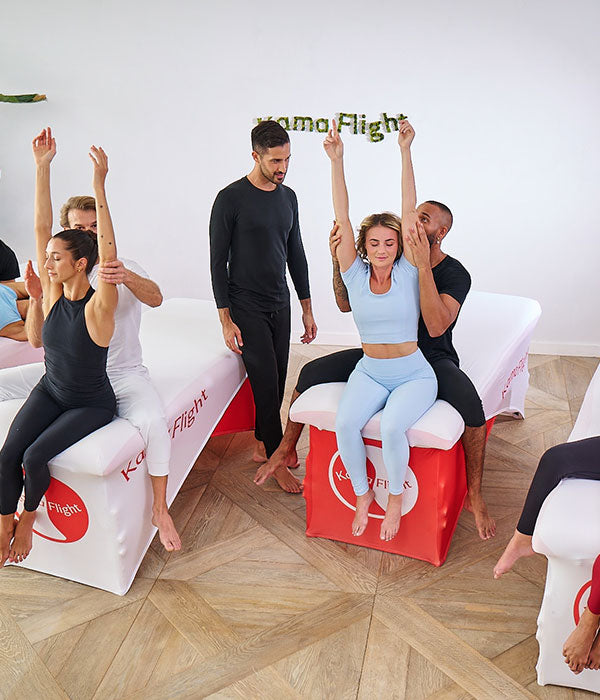
Kama Flight’s practice of partnered movement creates a container where participants can explore this relational intelligence in real time. The partner becomes a mirror, support, and collaborator. The massage table becomes a shared space for balance, play, and trust. The movement becomes a conversation.
Consent Makes Co-Regulation Reliable
Co-regulation is not simply being near another person. It depends on attunement. If one partner is pushing past another person’s limits, the experience becomes dysregulating. If both partners are listening, adjusting, and respecting boundaries, the experience becomes more likely to support calm, connection, and flow.
This is where consent becomes a practical neuroscience tool. It helps partners answer:
“Can I trust this person to listen?”
Trust grows when feedback is welcomed.
“Can I trust myself to speak?”
Self-trust grows when boundaries are practiced.
“Can my body relax here?”
Relaxation becomes possible when choice is real.
The Role of Psychological Safety in Relational Wellness
Psychological safety is often discussed in workplaces, but it applies deeply to wellness spaces. Harvard Business School describes psychological safety as an environment that supports interpersonal risk-taking, such as asking questions, sharing concerns, or admitting uncertainty (Harvard Business School Online).
In a Partnered Wellness environment, psychological safety allows participants to say:
“I need a moment.”
“That does not feel right.”
“Can we go slower?”
“I would like to try again.”
“Yes, I feel safe.”
These statements may seem simple, but they are profound. They create a culture where honesty is valued more than performance. In Kama Flight, that matters because the goal is not to force a shape or impress an observer. The goal is relational flow: two people learning how to move, listen, respond, and connect.
Consent as a Practice of Relational Intelligence
Relational intelligence is the ability to sense, communicate, adapt, and care within connection. Consent is one of the most direct ways to train it.
Every consent check builds awareness. Every boundary builds clarity. Every adjustment builds trust. Over time, participants may become more skilled at noticing subtle signals in themselves and others. They may learn that “no” can deepen trust, that “pause” can protect connection, and that “yes” becomes more meaningful when it is freely chosen.
This is the deeper promise of consent-based Partnered Wellness. It does not weaken intimacy. It strengthens it.
Why Consent Strengthens the Kama Flight Experience
Kama Flight is built around connection through movement, play, touch, and trust. Consent strengthens each of these pillars.
It strengthens movement because partners can explore without forcing.
It strengthens play because play requires safety.
It strengthens touch because touch becomes collaborative.
It strengthens trust because boundaries are honored.
It strengthens neuroscience because the body can shift from protection into presence.
Consent also makes Kama Flight more accessible. People arrive with different histories, comfort levels, bodies, relationships to touch, and nervous system patterns. A strong consent culture creates room for those differences. It allows each participant to enter the practice at the level that feels right for them.
Building a Consent Culture in Partnered Wellness
A consent culture is created through repetition. It is not a speech at the beginning of class and then forgotten. It is woven into the entire experience.
Partnered Wellness facilitators can support consent by encouraging clear check-ins, normalizing adjustments, offering opt-outs, demonstrating respectful touch, and reminding participants that consent can change at any time. Participants can support consent by listening carefully, asking before assisting, receiving feedback gracefully, and treating boundaries as connection rather than rejection.
In this way, consent becomes more than a rule. It becomes part of the movement vocabulary.
The Future of Partnered Wellness Is Consent-Based
The future of wellness is not just about flexibility, strength, or relaxation. It is about relationship. It is about learning how to feel safe with ourselves and with one another. It is about rebuilding trust in the body’s signals and honoring the intelligence of the nervous system.
Kama Flight sits at the intersection of partnered movement, relational wellness, neuroscience, and embodied communication. Its power comes from the fact that it is not only practiced with the body—it is practiced between bodies.
Consent is what makes that “between” space safe enough to explore.
When consent leads, Partnered Wellness becomes more ethical, more inclusive, and more neurologically supportive. It helps participants move beyond performance into presence, beyond assumption into communication, and beyond contact into true connection.
That is why consent is not separate from the neuroscience behind Kama Flight. Consent is the foundation that allows the neuroscience to work.
SOURCES:
1. SAMHSA Trauma-Informed Approach
Used for: Trauma-informed principles such as safety, empowerment, voice, and choice.
Link: SAMHSA Trauma-Informed Approaches
2. National Institutes of Health / PubMed Central
Used for: Social support, stress buffering, oxytocin, and brain regions involved in self-regulation.
Link: NIH/PMC: Social Support and Stress Buffering
3. Nature Reviews Neuroscience
Used for: Affective touch, pleasant touch, emotional communication, and C-tactile afferents.
Link: Nature Reviews Neuroscience: Affective Touch
4. Harvard Business School Online
Used for: Psychological safety and interpersonal risk-taking.
Link: Harvard Business School Online: Psychological Safety