What Is Co-Regulation?
Co-regulation is the process by which one nervous system helps another nervous system become more settled, organized, or connected.
We see this from infancy onward. A calm caregiver can help a baby regulate. A trusted friend can help us breathe more easily during stress. A steady partner can help us feel less alone in a difficult moment.
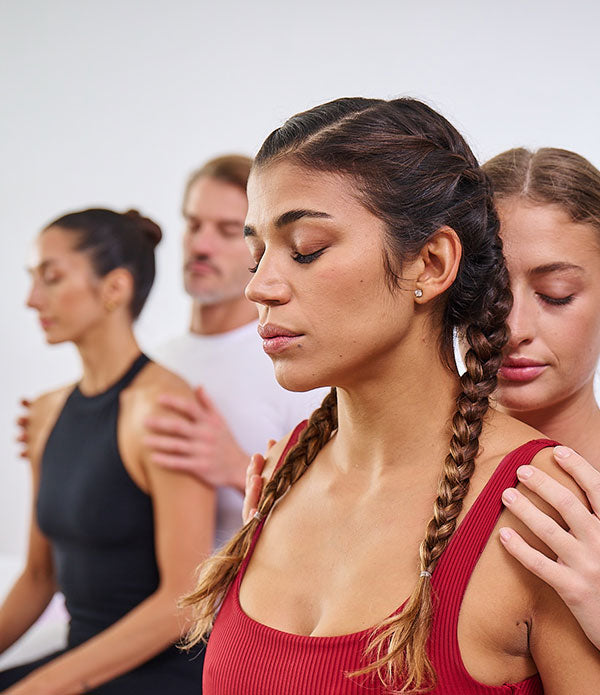
From a neuroscience perspective, co-regulation involves social cues that tell the brain and body, “You are not facing this alone.” These cues may include facial expression, tone of voice, pacing, breath, touch, posture, and responsiveness.
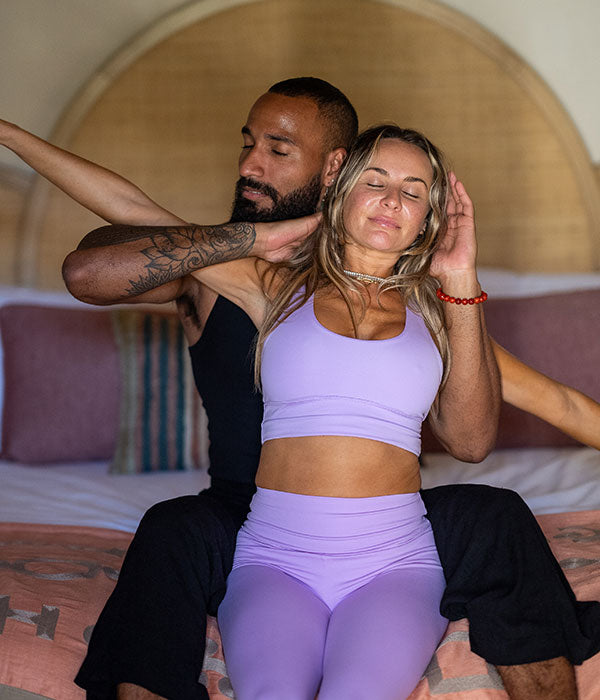
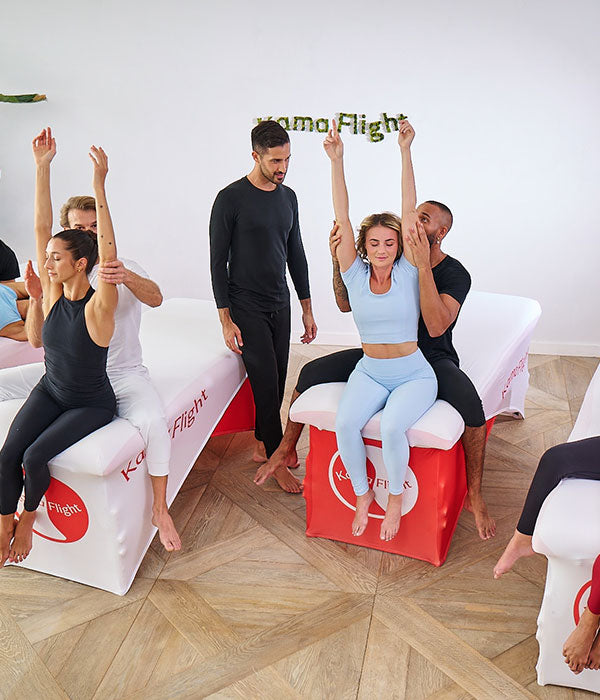
Partnered Wellness practices such as Kama Flight may offer a structured way to explore these cues through movement.
Social Support and the Stress Response
Research on social buffering suggests that supportive relationships can reduce the impact of stress. Brain regions involved in self-regulation, along with neurochemical systems such as oxytocin, may play a role in how social support influences emotional and physiological stress responses.
This does not mean another person can “fix” someone’s nervous system. It means safe connection can help create conditions where regulation becomes more accessible.
For trauma survivors, this distinction matters. Co-regulation must never become control. It must be based on consent, choice, and attunement.
How Kama Flight May Support Co-Regulation
Kama Flight is built around partnered movement, communication, trust, and connection. In a trauma-sensitive setting, this kind of practice may help participants explore co-regulation through shared rhythm, physical support, and responsive communication.
Breath and Rhythm
Moving with another person can create a shared rhythm. When that rhythm is slow, predictable, and consensual, it may help the body feel more organized.
Touch and Pressure
Touch can be calming for some people when it is wanted, respectful, and adjustable. Research on affective touch suggests that gentle, socially meaningful touch is processed through sensory and emotional pathways. But touch is not universally soothing. Consent determines whether touch is experienced as supportive or intrusive.
Communication and Feedback
Co-regulation depends on feedback. A partner who listens and adjusts becomes a cue of safety. A partner who ignores discomfort becomes a cue of threat.
Trauma-Sensitive Co-Regulation
For people who have experienced trauma, closeness can be complicated. Connection may be desired and feared at the same time. This is why trauma-sensitive Partnered Wellness should always move at the speed of trust.
Co-Regulation Requires Choice
A participant should be able to say yes, no, pause, or not today. Choice helps prevent the nervous system from feeling trapped.
Co-Regulation Requires Attunement
Attunement means noticing what is happening in the other person and responding with care. In Kama Flight, this may look like adjusting pressure, slowing movement, or checking in verbally.
Co-Regulation Requires Boundaries
Boundaries do not block connection. They make connection safer. A clear boundary tells both nervous systems where safety begins.
The Neuroscience of Feeling Safe With Another Person
The brain is highly social. Human beings are wired to detect whether others are safe, threatening, available, dismissive, or responsive. A safe partner can help reduce perceived threat. An unsafe partner can increase it.
In partnered movement, this becomes very practical. The nervous system is asking:
“Is my partner listening?”
“Can I stop?”
“Will my body be respected?”
“Is this experience predictable enough for me to stay present?”
When the answers are yes, participants may have more capacity for connection.
Why This Matters for Community Wellness
Loneliness, disconnection, and stress are public health concerns. Community practices that teach safe connection may offer meaningful support. Kama Flight may contribute by giving people a structured, playful, and consent-based way to practice relational awareness.
It should not be presented as trauma treatment. But it may be understood as a supportive wellness practice that teaches communication, connection, nervous system awareness, and trust.
Sources
-
Social Support Can Buffer Against Stress and Shape Brain Activity
-
Convergent Neuroendocrine Mechanisms of Social Buffering and Stress Contagion
-
C-Tactile Afferent Stimulating Touch Carries a Positive Affective Value